Detailed product description
Combining the required information
The counting function complements manually set characters. The advancing positions and available repetitions depend on this particular version. Refer to the print-layout illustration for the arrangement.
Print-unit arrangement
These values identify the configuration offered here. A character position is one adjustable band; an attached dot can share a band with a numeral. Currency and unit symbols are available only at the positions shown in the print-layout diagram.
- Print lines: 1
- Character positions: 8
Matching rolls and consumables
The assigned label format is 26 × 12 mm. The outline, backing and feed cuts must also fit the device. Check more than the outer dimensions when replenishing the rolls. Choose the colour, adhesive and any preprint for the intended application.
Ink roller and operating guidance
Assigned replacement: Item no. blitz-fr01. Replace the ink roller when the impression fades. Use the instructions for the relevant series when loading labels or changing the roller.
Replacement ink-roller references
Use the following item references when replenishing the assigned roller: blitz-fr01. Also compare its construction with the existing roller.
Four manual characters before the four-digit counter
Textile 2644 prints eight positions on a 26 × 12 mm label. The first four use manually selected 3 mm characters, including the illustrated numerals, letters and size abbreviations, and can be left blank. Four 4 mm counter digits follow and always remain in the impression. To change a front position, pull out the setting wheel until the pointer identifies it, then turn to the required character. Reset the counter manually to zero or another starting value. Matching wavy-edge labels are specified for series marking; the replacement roller is blitz-fr01.
Selecting four counting modes with the white marker
Viewed from above, the white marker identifies the mode. At the far right, the counter increments on every label, for example 0001, 0002, 0003. At the first line, each value is printed twice: 0001, 0001, 0002, 0002. Between the first and second lines, the number stays unchanged. At the second line, two identical labels are followed by an increment of ten: 0001, 0001, 0011, 0011, 0021, 0021. After a manual adjustment, return the selector to the required mode and check several labels. Matching numbers can identify two related parts or an object and its accompanying record.

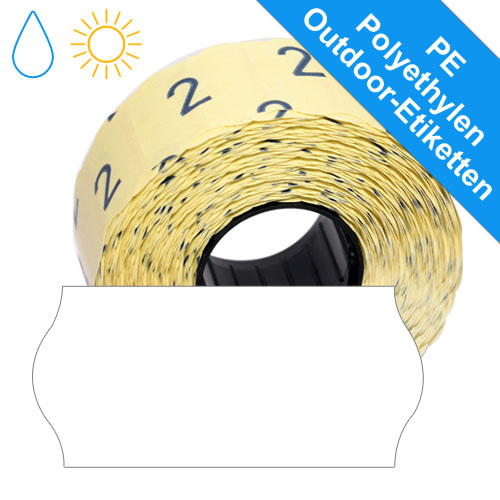 PE film labels for outdoor applications – 26 × 12 mm
 Seven colours with permanent adhesive – 26 × 12 mm
 Fluorescent yellow “Sicher geröntgt” labels – 26 × 12 mm
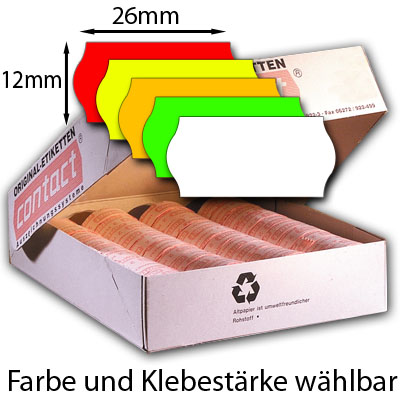 contact wavy-edge labels, 42 rolls – 26 × 12 mm
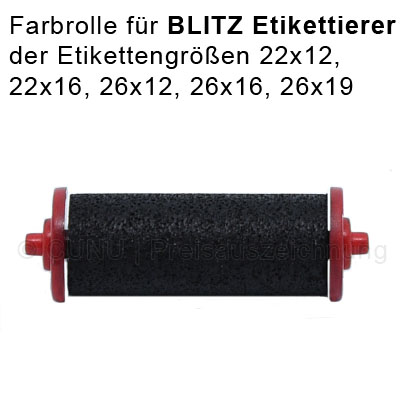 Black replacement ink roller for Blitz hand labellers
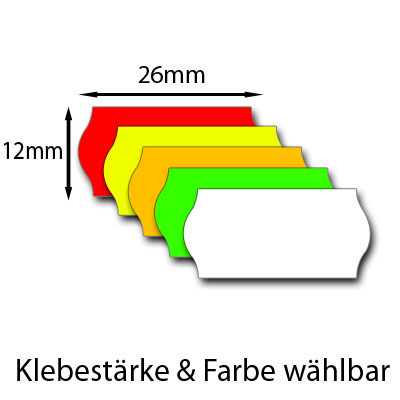 54,000 wavy-edge labels in selected variants – 26 × 12 mm
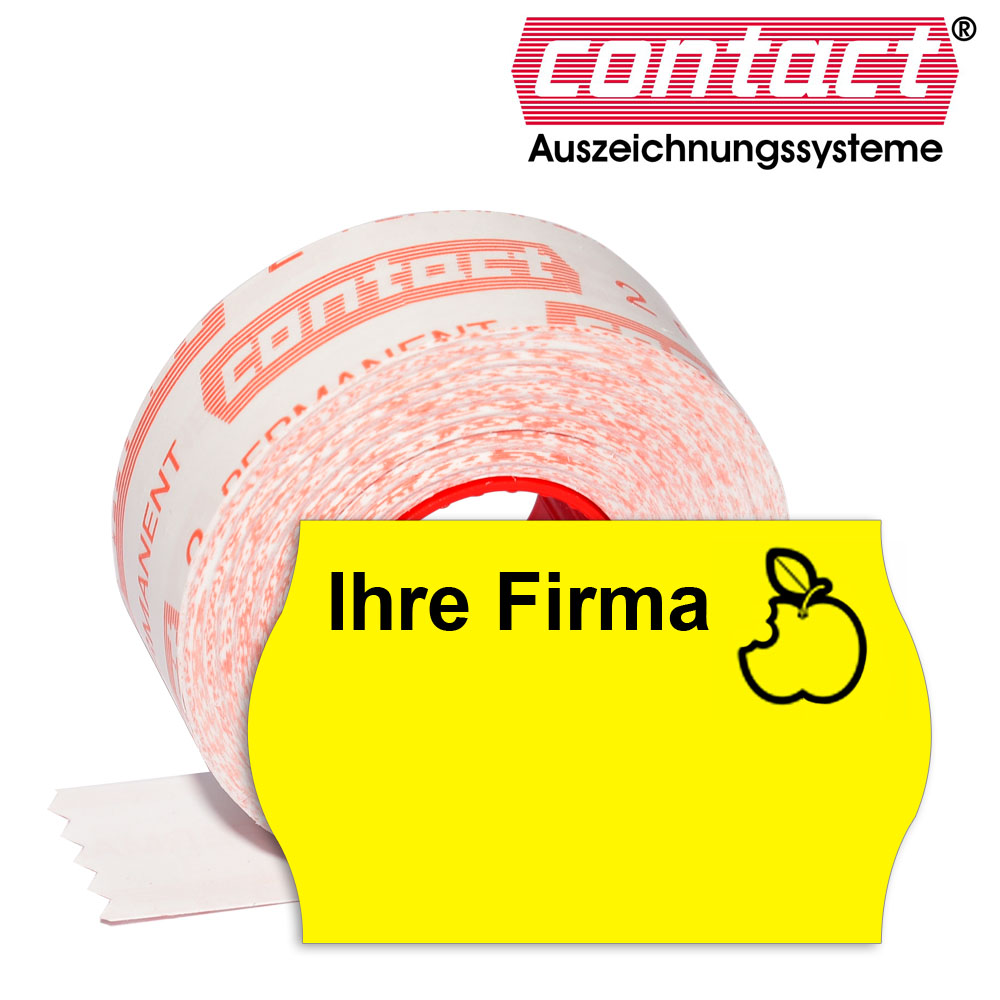 contact labels with your business preprint
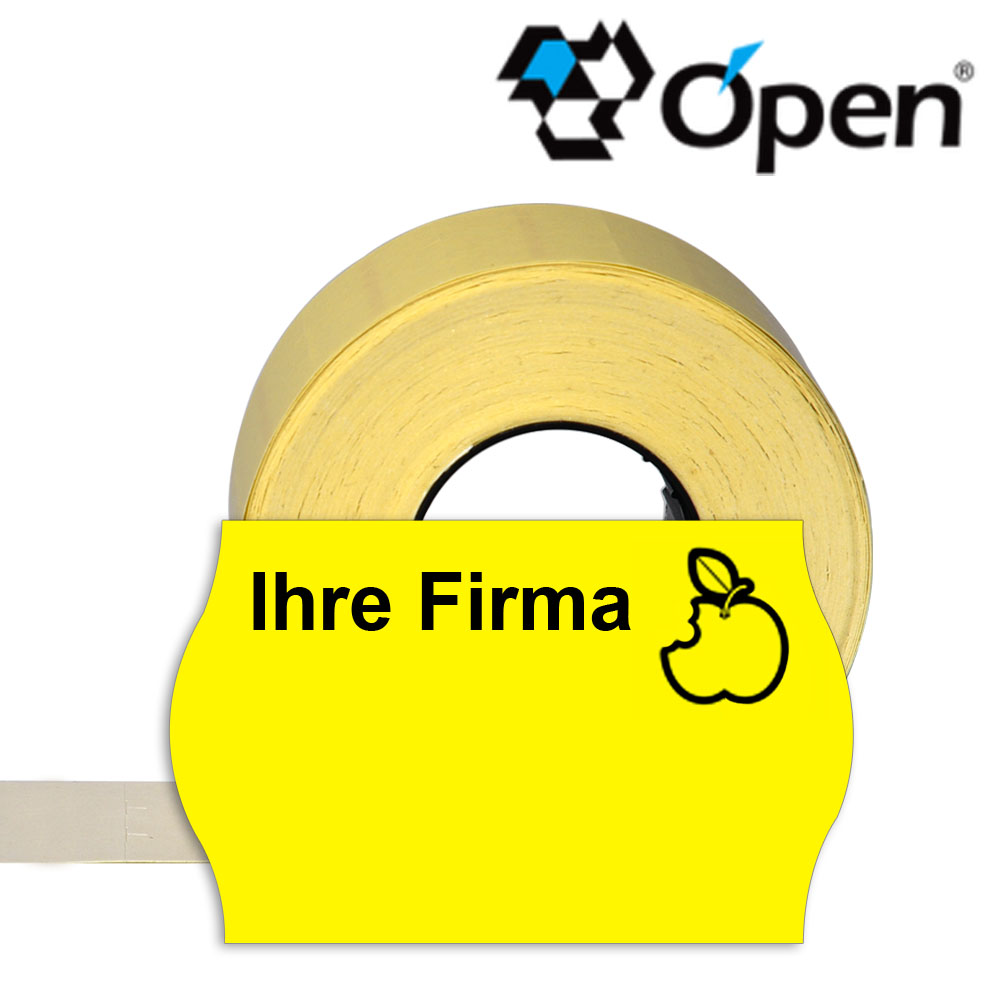 Open Data labels with a custom preprint